
Industrial Screw Conveyor Applications
Screw conveyors are used where bulk material must be moved, metered or discharged in a compact, enclosed path. The best arrangement changes significantly between free-flowing powder, abrasive aggregate and wet or sticky product.
Cement, construction and minerals
Cement screw conveyors and feeders are commonly considered for transferring powder from silos, feeding batching equipment and linking process stages. Abrasive aggregates and minerals may require heavier construction and planned wear protection.
Powders, granules and process ingredients
Enclosed screws can help contain dust and connect hoppers, mixers, bagging lines and other process equipment. Material flow behavior and the feeding method are essential inputs because poor inlet control can overload a conveyor.
Food, chemical and corrosive service
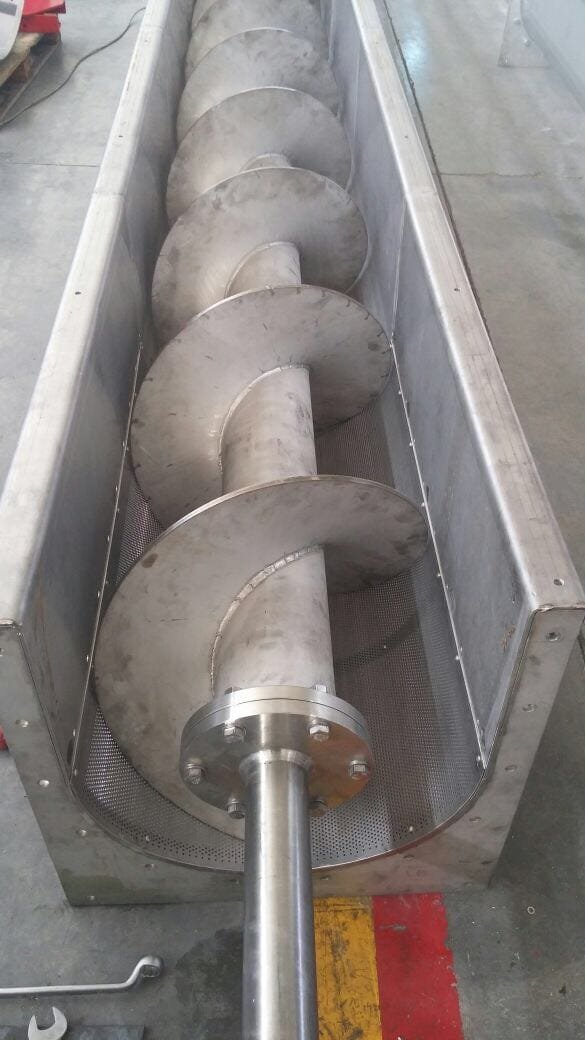
Stainless-steel construction may be considered where corrosion resistance, washdown or product-contact requirements apply. The required finish, seals, access and cleaning method must be agreed for the specific process and applicable standards.
Waste, sludge and difficult materials
Wet, sticky, fibrous or irregular material can demand a different flight, shaft and trough arrangement. A representative material sample or operating history is especially useful when evaluating these applications.
Industrial Screw Conveyor Applications FAQ
- Where are screw conveyors used in cement plants?
- They are commonly used to transfer cement and additives from silos, feed batching and weighing equipment, and link filters, mixers and process stages in an enclosed path.
- Can a screw conveyor handle abrasive material?
- Yes, provided the construction reflects the duty. Heavier flight thickness, suitable material grades and planned wear protection and inspection access are normally reviewed for abrasive products.
- Are stainless screw conveyors available for food or chemical use?
- Stainless construction can be specified where corrosion resistance, washdown or product-contact requirements apply. The grade, finish, seals and cleaning method are agreed for the specific process.