
Types of Screw Conveyors
Screw conveyors share the same basic principle, but their geometry, enclosure and drive arrangement change with the material and the duty. This guide helps project teams narrow the right configuration before detailed engineering.
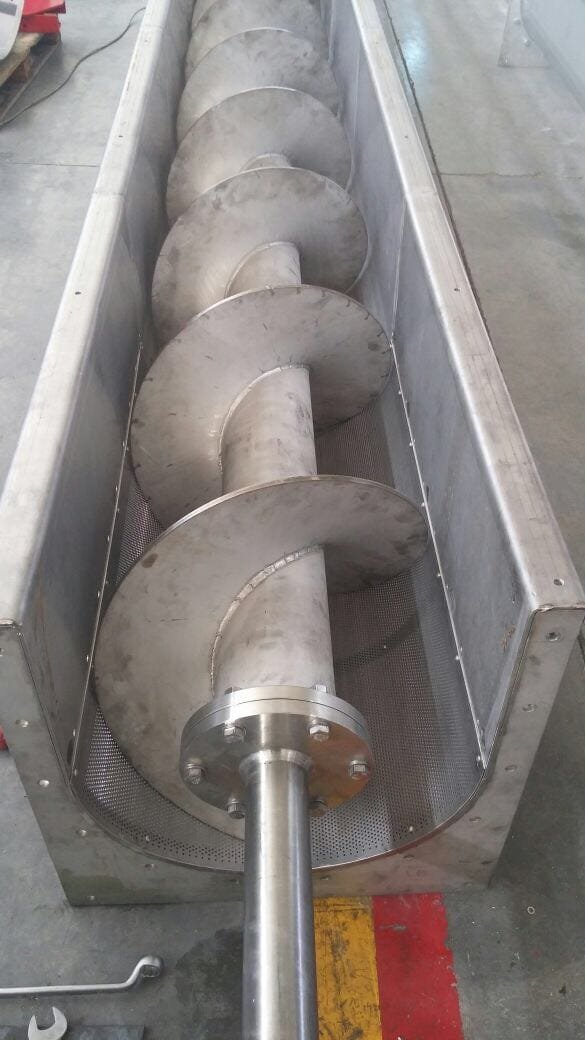
Horizontal and inclined screw conveyors
Horizontal units are commonly considered for controlled transfer between process stages. Inclined units solve elevation changes in a shorter footprint, but conveying capacity and power requirements must be checked against the angle, material behavior and fill level.
- Horizontal transfer between bins, mixers and process equipment
- Inclined layouts where floor space is constrained
- U-trough or enclosed tubular construction to suit access and containment needs
Vertical screw conveyors
Vertical conveyors move suitable bulk material upward in a compact footprint. They require careful coordination of feed consistency, rotational speed, flight design and discharge arrangement, so they should be selected from application data rather than diameter alone.
Shaftless, tubular and flexible systems
A shaftless screw may suit sticky, stringy or difficult material where a centre pipe would encourage wrapping. Tubular conveyors provide enclosed transfer. Flexible screw conveyors are often considered for lighter powders and granules on routes that benefit from a bendable tube. Final suitability depends on the material and operating conditions.
What Auger Bionics needs to recommend a type
Send the bulk material, required throughput, route length, incline, inlet and outlet positions, operating hours, temperature, moisture and any hygiene or corrosion requirements. Our Sharjah team can then discuss a practical configuration and fabrication scope.
Types of Screw Conveyors FAQ
- What are the main types of screw conveyors?
- Horizontal, inclined, vertical, tubular, shaftless and flexible screw conveyors are the arrangements most often considered. The right type depends on the material, the elevation change and the containment or hygiene requirements.
- What is the difference between a screw conveyor and a screw feeder?
- A screw conveyor transports material between two controlled points. A screw feeder sits under a hopper or silo outlet and controls the rate at which material is withdrawn, so its inlet geometry and pitch arrangement are designed differently.
- When is a shaftless screw conveyor used?
- A shaftless screw is typically considered for sticky, stringy, fibrous or wet material where a centre pipe would encourage wrapping and build-up.
Engineering references
For formal design requirements and calculations, consult the applicable standards and have the final equipment reviewed for the specific installation.