
Screw Conveyor Design & Specification
A dependable screw conveyor starts with the bulk material and duty—not a catalogue diameter. The information below is the basis for a useful technical discussion and a conveyor built around the actual process.
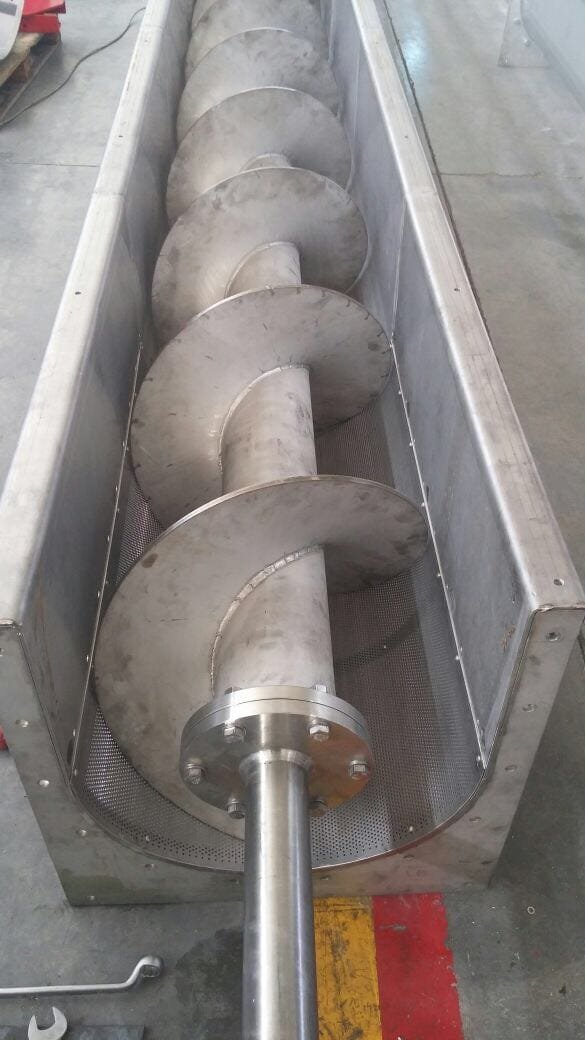
Start with the material
Bulk density, particle size, flowability, moisture, abrasiveness, temperature and corrosion risk influence almost every design decision. Hazardous or contamination-sensitive materials may also require additional controls outside the conveyor itself.
- Material name and bulk density
- Maximum particle or lump size
- Moisture, temperature and flow behavior
- Abrasive, corrosive, hygienic or hazardous characteristics
Define capacity and operating duty
State the required throughput, whether feed is controlled or flood-loaded, daily running hours and start-stop frequency. A screw feeder at a hopper outlet performs a different duty from a conveyor carrying material between two controlled points.
Set the route and interfaces
Overall length, incline, support positions, inlet and discharge locations, available headroom and adjacent equipment determine the usable arrangement. Drawings or marked-up site photographs help identify constraints early.
Choose construction and service access
Material grade, flight thickness, shaft arrangement, trough or tube, covers, seals, bearings and wear protection must reflect the service. Inspection, cleaning and replacement access should be considered before fabrication rather than after installation.
Screw Conveyor Design & Specification FAQ
- What information is needed to design a screw conveyor?
- The bulk material and its density, particle size, moisture and abrasiveness, the required throughput, the conveying length and incline, inlet and discharge positions, operating hours and any hygiene or corrosion requirements.
- How is screw conveyor capacity determined?
- Capacity follows from the screw diameter, pitch, rotational speed and the trough loading that the material allows, checked against the incline and the drive power available. It should be calculated from the actual material data rather than diameter alone.
- Does an inclined screw conveyor lose capacity?
- Yes. As the incline increases, material tends to fall back within the flights, so achievable capacity drops and the required power rises. The angle must be included in the design review.
Engineering references
For formal design requirements and calculations, consult the applicable standards and have the final equipment reviewed for the specific installation.